
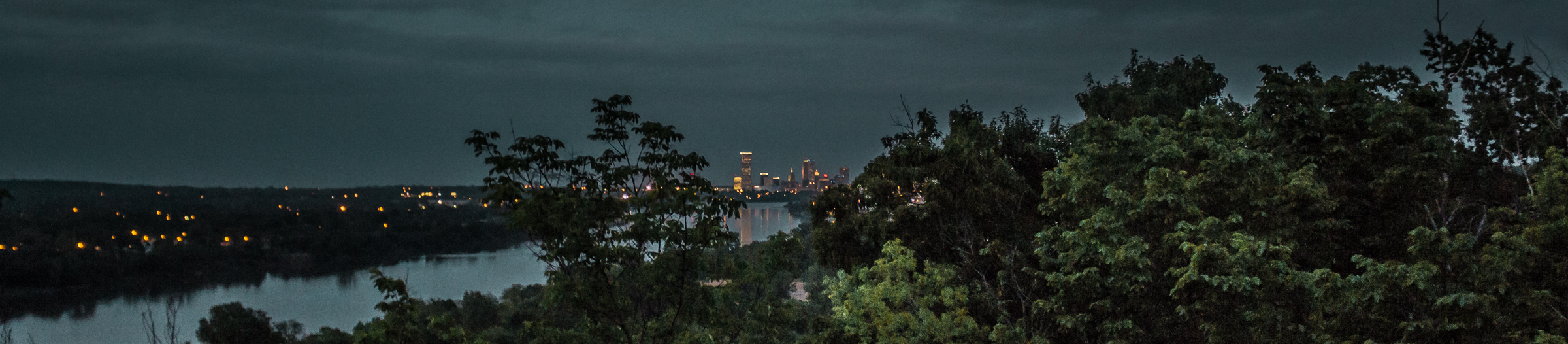
The Pause (And What It Actually Means)
There's a version of this conversation where you say "I'm moving to Tulsa" and the person you're telling pauses just a fraction of a second too long. You know the pause. It's the same pause that precedes very gently expressed concern, delivered by someone who has never set foot in Oklahoma and whose entire mental model of the state was formed in 2004. They are thinking about what they know, which is "Oklahoma," and what they know about Oklahoma is the bumper stickers and the legislation and the vague impression of a place that would prefer you didn't exist.
What they don't know is that Tulsa has a forty-year-old LGBTQ+ advocacy organization with its own building in the Arts District. Three dedicated gay bars, each genuinely distinct from the others. A Pride festival that draws tens of thousands of people every fall. Queer-owned restaurants and coffee shops and a lesbian bar that burned down in 2022, and which the community rebuilt from the ground up and reopened better than it was. The infrastructure here is real, and it has been built by people who decided that this city was worth fighting for and then spent decades proving it. Two Tulsans, Mary Bishop and Sharon Baldwin, even filed the 2004 lawsuit that helped win marriage equality for Oklahoma.
This guide is for anyone who's about to sign a lease in Tulsa, or seriously considering it, or has already moved here and is trying to figure out where the gay parts are. The short answer is that moving to Tulsa as an LGBTQIA+ person is a genuinely viable, frequently excellent life choice, and I will prove it to you in the next eight minutes.
The Neighborhoods: Where Moving to Tulsa as an LGBTQ+ Person Makes Sense
Tulsa doesn't have one gayborhood in the way that some cities do, with a single rainbow-flag-draped commercial strip and a cluster of boutiques selling rainbow-flag-draped merchandise. What it has is better: three overlapping zones where the queer community has deeply planted its flag, each with its own distinct personality, and none of them feel like a theme park.
The Tulsa Arts District (roughly East 2nd to East 6th Street) is the cultural and community center of queer Tulsa. Oklahomans for Equality has been headquartered here since 1980, and their presence shapes everything around it. Pony Coffee, Empire Slice House, Nothing's Left Brewing, Cabin Boys Brewing, Gypsy Coffee House: these are all within walking distance of each other, and the ambient queer friendliness of a Sunday afternoon in the Arts District is immediately legible to anyone paying attention. If you want to feel like you live in a gay city, live near here.
Cherry Street (East 15th Street and surrounding blocks) is the neighborhood you end up spending every Saturday in without planning to. Yellow Brick Road is here, which is one of approximately thirty lesbian bars still operating in the entire United States, a number that should alarm all of us, and which makes YBR's continued existence and renovation a genuine act of community defiance worth supporting with your money and your presence. Il Seme is here, a queer-owned Italian restaurant where the handmade pasta alone is reason enough to move across state lines. The vintage stores, coffee shops, and restaurant strip on 15th make this the most livable stretch in the city.
Brookside (South Peoria Avenue and surrounding streets) is the adjacent residential neighborhood where a significant number of queer Tulsans have put down roots, and it shows. St. Vitus Bar and Mercury Lounge are both here, reliably gay-friendly spaces with craft cocktails and live music that draw a mixed crowd where nobody thinks twice about anything. If you want a neighborhood that feels like a neighborhood, with front porches and weekend farmers markets and a bar you can walk to, this is your answer.
The Pearl District and midtown are close enough to the Arts District and Cherry Street that the distinction matters more to longtime residents than to newcomers. If you're apartment-hunting, prioritize proximity to the Arts District / Cherry Street corridor and you'll land somewhere good.
The Gay Scene: Bars and Community Infrastructure
Three venues anchor LGBTQ+ nightlife in Tulsa, and the fact that they're genuinely different from each other is a gift that not every mid-sized city gets right.
Beyond the bars: Oklahomans for Equality (OkEq) at 621 E 4th St is the backbone of queer Tulsa's community infrastructure. They've been here since 1980 and they run counseling, support groups, a health clinic, a library, a theater, community events, youth programs, and the Equality Center space where much of the city's queer organizing happens. If you want to plug into the community quickly after moving to Tulsa, walk in, introduce yourself, and ask what's happening. They're genuinely glad you're here, and they'll tell you everything.
The Practical Stuff: Healthcare and Employment
Healthcare for LGBTQ+ people in Tulsa is real and navigable, though it requires knowing where to look. OkEq's Equality Center has a health clinic and maintains an updated referral list of affirming primary care and mental health providers. For trans healthcare specifically, there is a genuine network of affirming providers in the city, though the current legislative environment means some pathways are more complex than they would be in other states. Our trans resources guide for Tulsa lists support groups, doctors, crisis lines, and legal help with verified phone numbers. The local Facebook groups, particularly the Tulsa LGBTQ community groups, surface current provider recommendations quickly when things change, because things do change and the community tracks it. If you are looking for sobriety support, we put together a separate guide to LGBTQ+ recovery resources in Tulsa.
Employment: the city passed local non-discrimination ordinances in 2019 covering sexual orientation and gender identity. Tulsa's major employers, including ONEOK, Williams Companies, the University of Tulsa, and the major hospital systems, all have non-discrimination policies that include LGBTQ+ workers. That doesn't make every individual workplace perfect in every department, but the legal baseline is real and the corporate culture at the large employers reflects it.
On the State Politics: The Honest Assessment
You deserve a straight answer about this, not a paragraph that buries the difficulty in reassuring language, so here it is: Oklahoma has passed serious anti-LGBTQ+ legislation, some of it directly targeting transgender youth, and the state legislature shows no current signs of moderating. That is the reality, and pretending it isn't doesn't serve you.
The practical effect on daily adult life in Tulsa is that you will live in a city you love inside a state whose government does not love you back, and that is a genuine thing to weigh. What it does not mean is that you will be unsafe walking through the Arts District, unwelcome in the city's core queer-friendly zones, or without community resources and legal protections at the municipal level. The city itself is a different political entity than the state government, and Tulsa has consistently demonstrated that the hard way.
The queer community here has not retreated in response to state politics. If anything, it has become more organized, more visible, and more funded in direct proportion to how hostile the legislature has become. OkEq has expanded its programming. Freedom Oklahoma has grown. The bars are full on Thursday nights. Pride draws tens of thousands in the fall. The Equality Center's lights are on every day of the week. The community that built all of this did not build it in a friendly environment and they're not going to abandon it now.
What you are moving into is a resilient, rooted community that has been fighting for itself in this specific place for more than four decades, and that has decided the fight is worth it. Whether you agree with that calculus is something only you can decide. But the community itself has made its call, and it's not going anywhere.
How to Find Your People in Tulsa
The city is the right size for this: large enough to have real infrastructure across nightlife, sports, arts, faith communities, and advocacy, small enough that you will start recognizing faces within three months and feel like you belong somewhere specific within six. That's not a small thing. That's most of what makes a place feel like home.
Start with OkEq. Their event calendar is comprehensive and they run community social events specifically designed for people who are new to the city. Show up to one. It works.
The sports leagues are real and welcoming, and they're one of the fastest ways to find your social group: Lambda bowling meets weekly, HotMess kickball runs in spring and fall, Metro softball has multiple teams, and the Green Country Bears have their own organization. You do not need to be particularly good at any of these sports. You do need to show up. Full sports league guide here.
Follow @tulsagays on Instagram. Every Monday we publish the complete queer event calendar for the week, compiled from over eighty community sources, so you'll know about drag shows, OkEq events, sports leagues, film screenings, social mixers, and fundraisers before your first month is over. Subscribe to the newsletter at tulsagays.com/newsletter.html and it arrives in your inbox Monday morning without you having to remember to look.
Check the full events calendar and the LGBTQ+ business directory to get your bearings. The directory is where you find the queer-owned businesses you should be spending money at, the coffee shops where you'll run into people, the restaurants worth calling ahead for on a Saturday night. If you work from home, start with our list of LGBTQ+-friendly coffee shops in Tulsa for working remotely, and for the businesses behind the directory, read about five LGBTQ-owned businesses worth your money.
Tulsa's queer community has been building something real here since before most of us were born, in a state that has spent considerable legislative energy making it difficult. They're still here. The bars are still open. The Equality Center is still full. Every person who moves here and plants themselves in this community makes it stronger, and the community is better at welcoming newcomers than it has any reason to be, given everything it's been through.
You made a good call. Come introduce yourself.
Know something we don't?
Got an event, venue, or org we should be covering? Hit submit and we'll add it.
Submit an Event →