
Every queer person who has ever walked into the Dennis R. Neill Equality Center for the first time assumes it has simply always been there. Downtown, on East 4th Street, four walls that are unmistakably, unapologetically for you. It has not always been there, honey. For a long stretch of Oklahoma history, the closest thing this city had to an LGBTQ+ community center was a second-story office tucked into the back of a Brookside building, with no sign out front, because a sign was an invitation for someone to break the windows. Here is how a handful of people in 1980 turned that into the building standing today, and why it took twenty-seven years.
1980: How Oklahomans for Equality Began With No Building
Oklahomans for Equality started life under a different, more clinical name: Tulsa Oklahomans for Human Rights, TOHR for short, founded in 1980 as a Tulsa chapter of an Oklahoma City-based organization. There was no building, no staff, no budget to speak of. There was a small group of gay men and lesbians who had decided, in a state and a decade that gave them absolutely no reason to expect success, that Tulsa needed an organization anyway. That decision is the whole origin story. Everything else, the Equality Center, the health clinic, the 45 years of continuous operation, traces back to people who started with nothing but each other and refused to consider that a disqualifying condition.
1982: Chandler Park and Tulsa's First Pride
Two years in, TOHR organized Tulsa's first Gay Pride Week. Its own May 1982 newsletter called it "Tulsa's first major commemoration of the beginning of gay liberation," a direct nod to the Stonewall riots of 1969. A few hundred people showed up to Chandler Park on the city's west side, which tells you everything about how this event actually looked: no parade, no route down Main Street, no permit fight with the city over rainbow crosswalks, because none of that was remotely on the table yet. It was a picnic in a park most Tulsans wouldn't think twice about, attended by people who understood exactly how much was riding on nothing going wrong. It worked. It kept happening. Tulsa Pride today, the one that now runs every October and pulls in tens of thousands of people, has a straight, unbroken line back to that Chandler Park afternoon.
The Hidden Years: Tulsa's First LGBTQ+ Community Center
TOHR's earliest home base, in the early 1980s, was a second-story office in the back of a Brookside building, chosen precisely because it wasn't visible from the street. That caution wasn't paranoia. When the organization finally opened Oklahoma's first dedicated LGBTQ+ community center in October 1996, formally called the Tulsa GLBT Community Center, it had to relocate more than once because neighbors got upset and the space got vandalized. Read that sentence again: a community center, doing nothing more radical than existing, kept getting targeted hard enough that it had to move. That's not backstory. That's the actual texture of what it cost to keep a queer organization alive in Oklahoma through the 1980s and 1990s, and it's worth sitting with before you walk into the building that eventually replaced it and take the calm of the place for granted.
Who Was Dennis R. Neill, Oklahomans for Equality's Namesake?
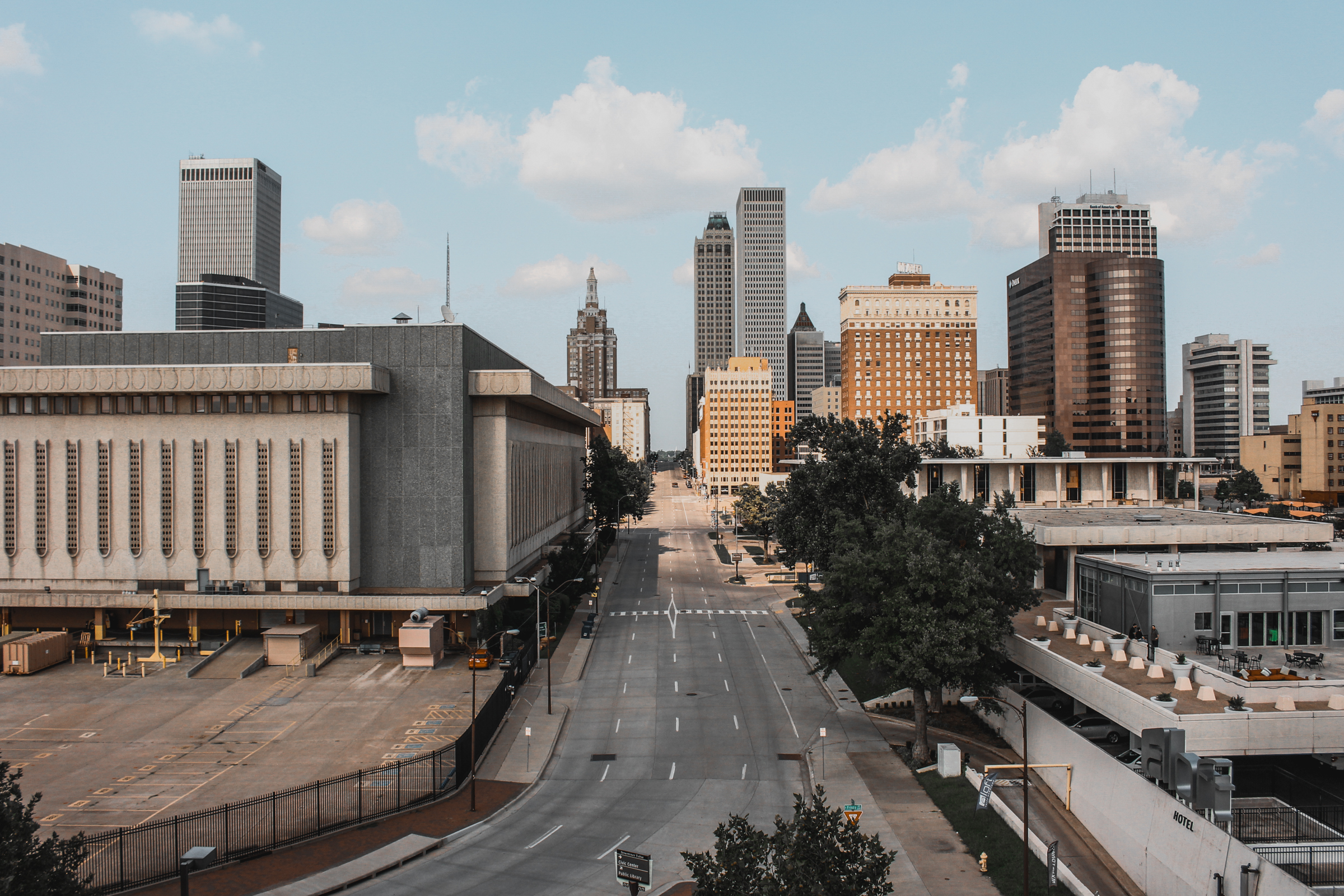
Dennis R. Neill founded Tulsa Oklahomans for Human Rights and became the organization's top benefactor, which is why the building at 621 E 4th St carries his name rather than a generic institutional label. In 2006, ahead of the new center's opening, TOHR formally renamed itself Oklahomans for Equality, the name it carries today. It's a small piece of paperwork with a lot of weight behind it: the organization that started as an anonymous chapter meeting in secret had grown enough, and survived enough, to put a founder's name on a building in downtown Tulsa and mean it as a statement rather than a liability.
2005 to 2007: Buying the Building on 4th Street
Buying a building doesn't happen on faith alone, and it took Oklahomans for Equality eight full years of capital campaigning to raise what it needed. The purchase closed in October 2005. What followed was not a quick paint job: volunteers put in more than 7,000 hours transforming the space before the Dennis R. Neill Equality Center formally opened its doors in February 2007. Do the math on that number for a second. Seven thousand hours is the better part of four full-time work-years, donated, by people who wanted this specific place to exist badly enough to build it themselves. That is the least dramatic-sounding, most genuinely moving fact in this entire history.
What Oklahomans for Equality Looks Like Now
Nearly two decades after that grand opening, the Equality Center has grown into an 18,000-square-foot anchor for Tulsa's LGBTQ+ community, a fact we've covered in full in our guide to what OkEq actually does today. The building now houses a real health clinic offering HRT, PrEP and PEP, and STI and HIV screening, a weekly gender support group, a library, and enough community programming to make "just walk in" genuinely good advice for anyone new to town. None of it was inevitable. All of it was built, decade by decade, by an organization that spent its first fifteen years hiding its address for safety and its next twenty building something too solid to hide.
The same era that gave Tulsa this building also gave Oklahoma marriage equality, care of two Tulsans, Mary Bishop and Sharon Baldwin, whose 2004 lawsuit took eleven years to win. Read their story here, it belongs in the same conversation as this one: different fight, same city, same decade of people who didn't wait for permission to start building something that would outlast them.
Forty-five years after a handful of people in a hidden Brookside office decided Tulsa needed this, it has it. Walk in. They're glad you're here now the way they hoped someone would be glad, eventually, back when the sign out front simply wasn't safe to hang.
Find It
Dennis R. Neill Equality Center: 621 E 4th St, Tulsa, OK 74120
Chandler Park, Tulsa, OK (site of Tulsa's first Pride, 1982)
Know something we don't?
Got an event, venue, or org we should be covering? Hit submit and we'll add it.
Submit an Event →