
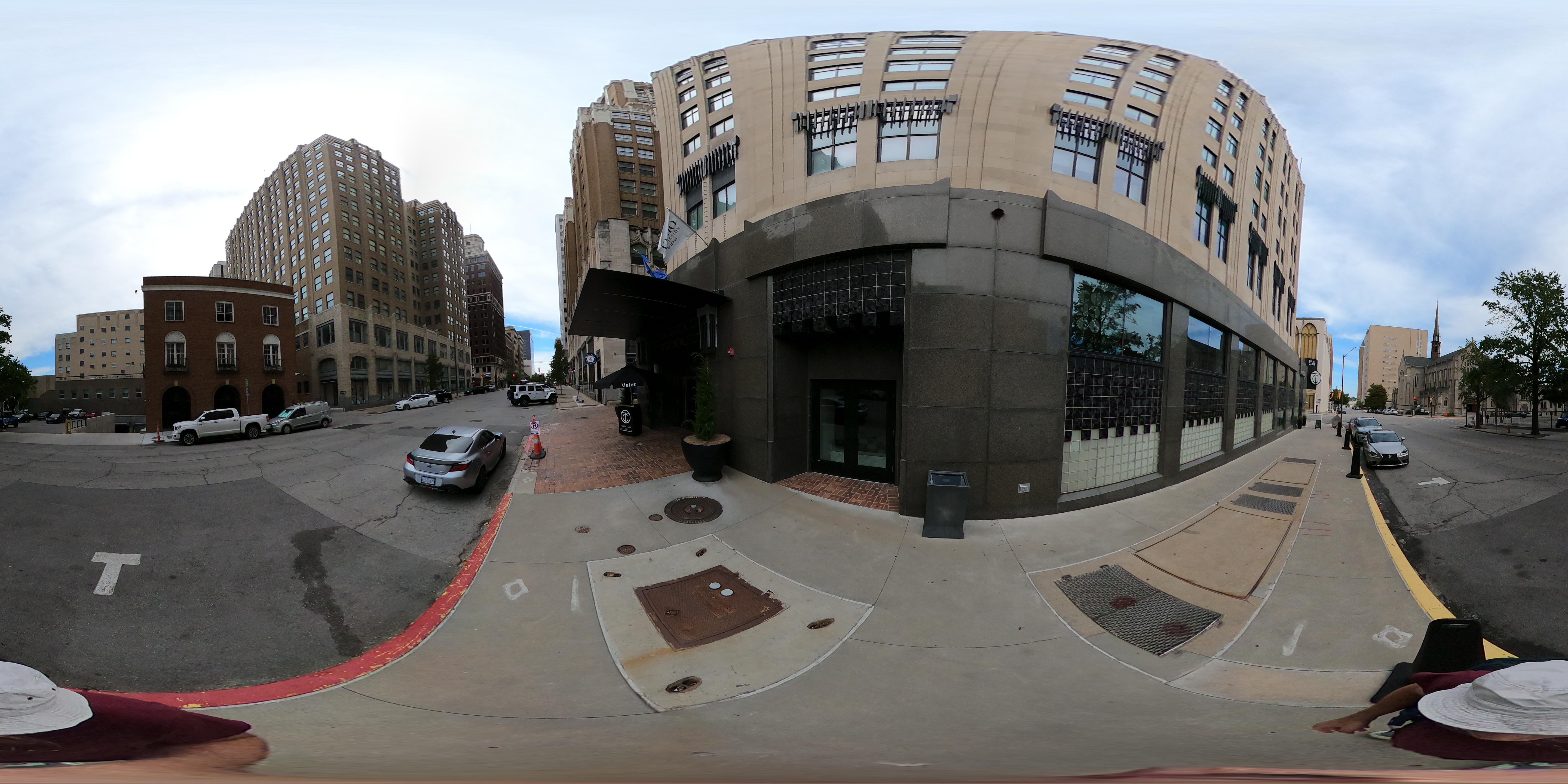
You're walking through the lobby of the Tulsa Club Hotel. The ceiling arches above you in sweeping Art Deco plasterwork, zigzag patterns radiating outward like something between a thunderstorm and a fever dream. Waterfall motifs cascade down the walls. Everything about this room tells you the man who designed it was not interested in doing what everyone else was doing.
His name was Bruce Goff. He was 23 years old when he drew these walls. He was gay. And Oklahoma, eventually, made him pay for it.
A Kid from Tulsa Who Changed American Architecture
Goff was born in 1904, and his family landed in Tulsa just as the city was erupting into one of the wealthiest boomtowns on earth. He was 12 years old when the local architectural firm Rush, Endacott and Rush took him on as an apprentice, apparently recognizing early that this kid had something no school could teach. He never went to architecture school. Frank Lloyd Wright and Louis Sullivan, two of the greatest architects America ever produced, both encouraged him through correspondence to stay right where he was and keep building.
He listened. Between 1917 and 1929, Goff designed more than 27 buildings in Tulsa alone. Most of them are still standing. You've probably walked past several without knowing who drew them.

What He Left Behind in Tulsa
Goff's fingerprints are all over this city if you know where to look. Here's the full tour.
The Tulsa Club Hotel: Book a Room

This is the crown jewel, and it doubles as your home base. Built in 1927, the Tulsa Club was an early commission for the young Goff, and he went for it completely. The building combined the Tulsa Chamber of Commerce (lower floors) with a private social club (upper six floors and a rooftop garden). When the Club dissolved in 1994, the building sat vacant for 20 years, vandalized and damaged by fire.
Then, in 2019, it came back as a 96-room boutique hotel following a $36 million restoration. The exuberant Art Deco plasterwork is intact, the zigzag motifs are intact, the waterfall tilework is intact, and the bones Goff drew at 23 years old are exactly what you sleep inside tonight. Staying here is not just comfortable. It is a statement, and it is one worth making.
Boston Avenue United Methodist Church
This is the building that made Goff famous, and it's also at the center of one of architecture's great unsolved arguments. The official church position is that art teacher Adah Robinson conceived the design and brought a young Goff in to execute it. Goff maintained the reverse. What's undisputed is the result: one of the finest Art Deco buildings in the United States, a soaring limestone tower covered in prairie-motif reliefs, praying hands, and geometric ornament that looks like it belongs in a 1930s film about the future.
Go inside. The sanctuary will stop you cold, and that is not a figure of speech.
Christ the King Catholic Church (Interior)
Goff designed the interior furniture, altars, and mosaics here in 1928. The exterior is unremarkable. The inside is pure Goff: textured, obsessive, and unlike anything you would expect to find in a parish church in Tulsa or anywhere else. Worth a visit if you're moving through midtown.
The Adah Robinson House (Drive-By)
Goff designed this home and studio for his mentor and collaborator Adah Robinson in 1923, two years before Robinson brought him onto the Boston Avenue Church project. It sits quietly in the Maple Ridge neighborhood. Respect the residents, but the exterior is its own reward and absolutely worth the detour.
Your Goff Walking Tour
The Part Oklahoma Tried to Forget
By the early 1940s, Goff had moved beyond Tulsa. He joined the University of Oklahoma's architecture school, became chair of the department in 1943, and spent the next decade building a national reputation for organic, wildly original design. Students traveled from across the country to study under him.

Then, in 1955, it ended. Goff was gay, and someone used that against him. A smear campaign accused him of "endangering the morals of a minor." Homosexuality was illegal in Oklahoma. The university president organized students and faculty to defend him, but Goff resigned rather than put the people who supported him through what was coming.
He spent the next three decades designing buildings from Florida to California to Minnesota. His masterwork, the Bavinger House in Norman (completed that same year he was driven out), was a 96-foot spiral of local sandstone anchored by a salvaged oil-rig mast, with no interior walls and a series of suspended living platforms rising through open air. The American Institute of Architects gave it their 25-Year Award in 1987. It was demolished in 2016. Gone, and the loss still stings anyone who knows what it was.
What remains is here, in Tulsa, the city that made him. The buildings are still standing. The lobby of the Tulsa Club still carries his obsessive, joyful, over-the-top imagination in every curve of plaster.
Why Stay at the Tulsa Club
Because representation in architecture matters the same way it does everywhere else. Because a 23-year-old gay kid from Tulsa drew those walls in 1927, was forced out of his state for who he was in 1955, and never stopped designing anyway. Because staying there is the most concrete way to say: we see this, we remember it, and we choose to honor it.
And because the rooms are genuinely beautiful, the location puts you walking distance from more of his work than you can cover in one afternoon, and the bar downstairs is very good. While you're staying, the LGBTQ+ Tulsa directory covers every gay-owned and affirming spot worth your dollar within a short drive.
Find It
Tulsa Club Hotel: 124 W 5th St, Tulsa, OK 74103
Boston Avenue Methodist Church: 1301 S Boston Ave, Tulsa, OK 74119
Know something we don't?
Got an event, venue, or org we should be covering? Hit submit and we'll add it.
Submit an Event →